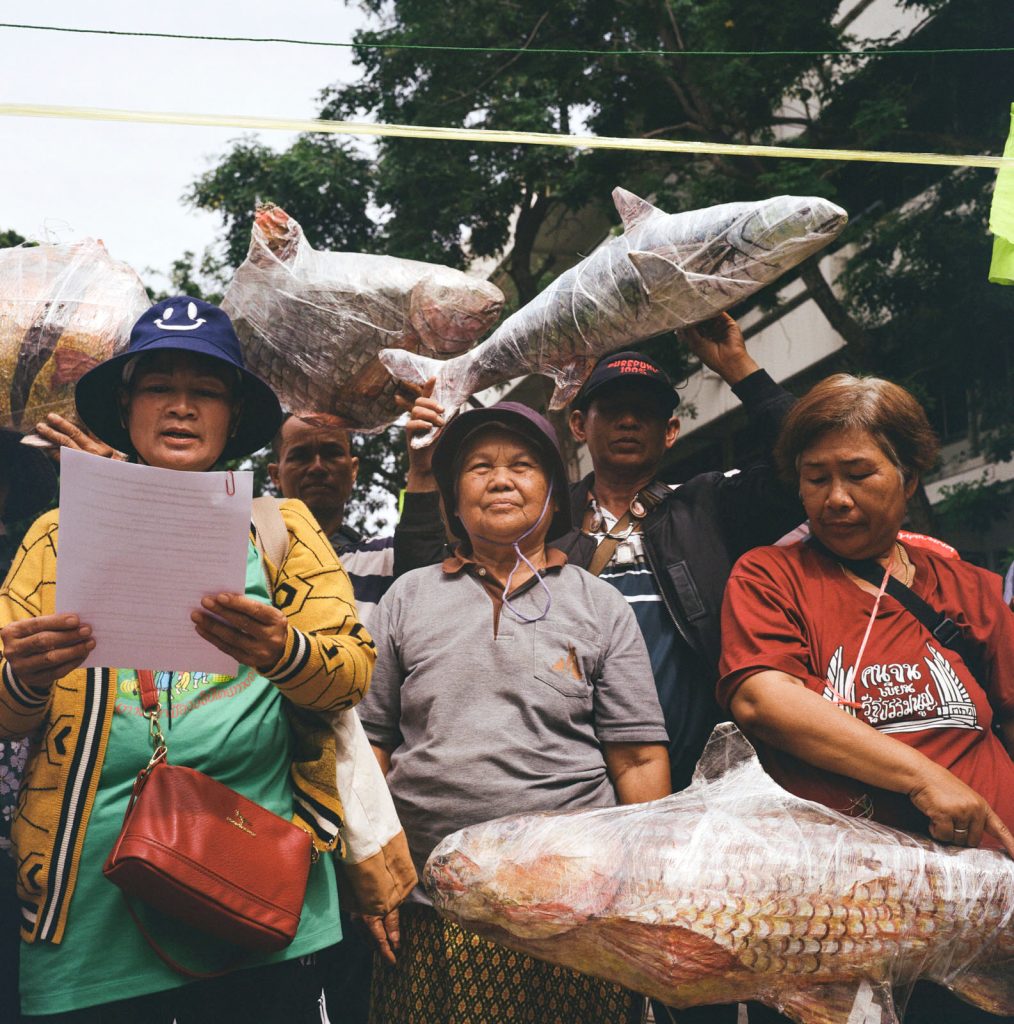
Built on promises that were never kept, the Pak Mun Dam devastated a riverside community. More than three decades later, one woman refuses to let Thailand forget.
The Tonle Sap lake supplies most of Cambodia’s protein and sustains millions of livelihoods. But dams and climate change are weakening its flood pulse, and fishers who once caught 50 kilograms a day are now returning with almost nothing.
Laos has positioned itself as Southeast Asia’s leading hydropower exporter. Along its rivers, the cost has been measured in demolished temples, submerged shrines and communities still searching for stable ground.
Thailand has withdrawn a bill that would have turned four southern provinces into a special economic zone, after mounting protests over a deep-sea port that threatened local fisherfolk and the tourist island of Koh Payam.
Five Mother Nature activists are serving sentences up to eight years in Cambodia’s prisons. Their wives, siblings, and children were not charged, but they are paying anyway.
What began as a contamination crisis on a northern tributary has reached the Mekong’s northeastern stretch, with lab results now confirming heavy metals in deformed fish hundreds of kilometres downstream.
The rivers that sustained life in Thailand’s northern borderlands for generations are now carrying poison – the byproduct of a mining boom feeding the world’s appetite for tech products.
The Urak Lawoi of Thailand’s Koh Lipe once produced virtually no waste. Now their community manages a daily logistics operation – sorting, loading, and barging ten tonnes of mostly tourist rubbish to a mainland landfill.
Women and children at flood shelters in the Muslim-majority Deep South face particular hardships, no breakfast, missing sanitary supplies, and safety concerns in mixed sleeping areas.